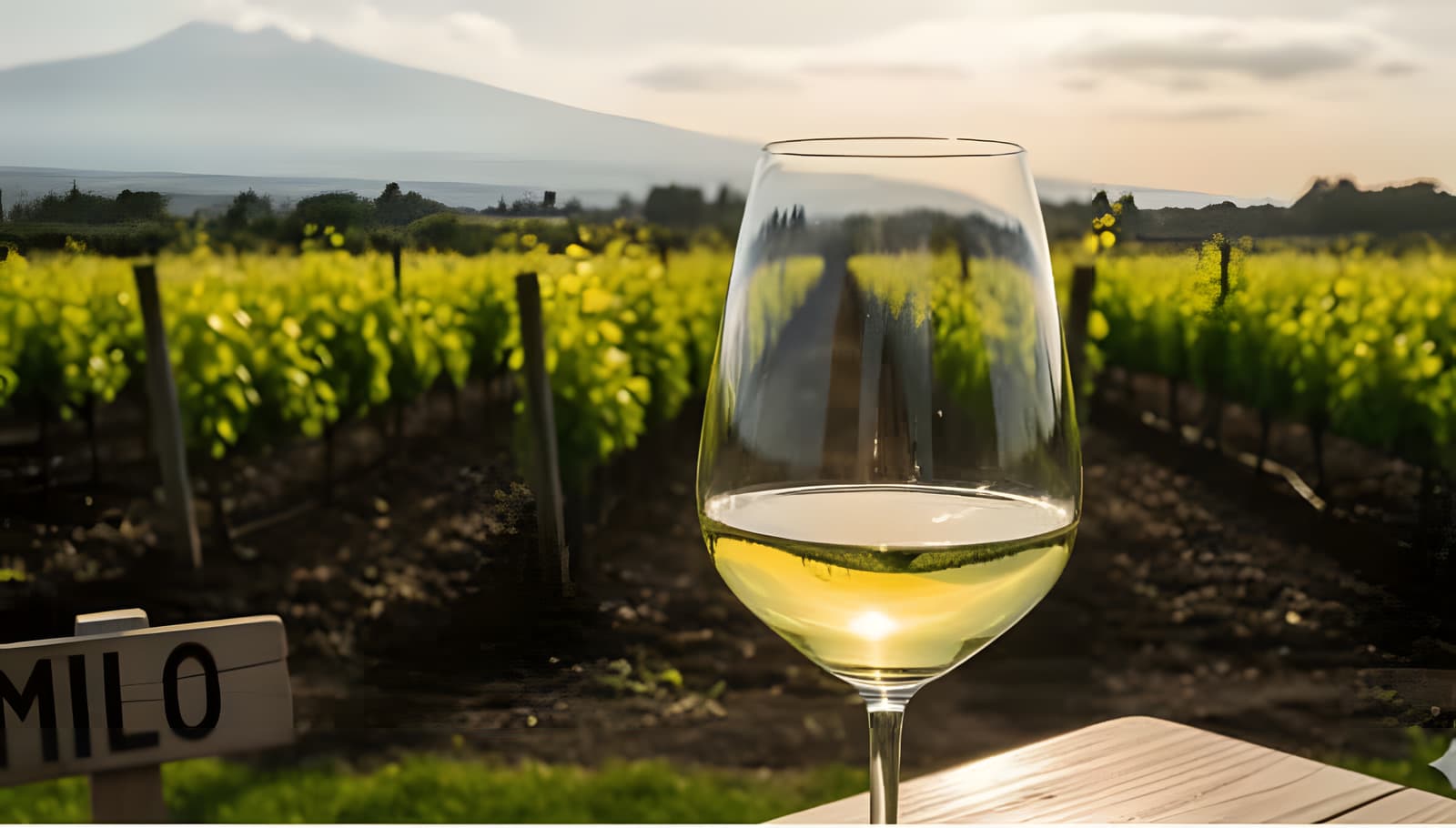
Among Sicily’s wines, few have the prestige and authenticity of Etna Bianco Superiore. Recognized under the Etna DOC since 1968, it is produced exclusively in the village of Milo on Mount Etna’s eastern slope. Its soul lies in Carricante, a white grape indigenous to the volcano. Thanks to volcanic soils, altitude, and the cooling influence of the Ionian Sea, Etna Bianco Superiore combines freshness, minerality, and remarkable aging potential. Today, it is considered one of Italy’s great white wines, standing alongside world-class terroirs.
Milo’s Terroir: A Volcanic Canvas
Milo sits between 600 and 1,000 meters above sea level, where vineyards overlook both the volcano and the Ionian Sea. The soils are composed of centuries of lava flows, ash, and pumice, layered with minerals that give Carricante its signature acidity and salinity.
Unlike Etna’s drier north and south slopes, Milo benefits from higher rainfall, frequent fog, and sea breezes. This cooler, wetter microclimate allows Carricante to ripen slowly, concentrating flavors and preserving acidity. The east-facing terraces capture the morning sun while avoiding the intense afternoon heat, creating wines with balance and precision.
For a broader perspective on the region, the Sicily Wine Region Guide by Wine Folly outlines how Etna stands apart as Italy’s premier volcanic appellation.
Carricante: Etna’s Ancestral White
Carricante has been cultivated on Etna for centuries. The name comes from carricare (“to load”), referencing the grape’s high yields. In Milo, careful viticulture transforms Carricante into an elegant, age-worthy wine.
Tasting Profile
-
Appearance: Pale straw yellow with green reflections
-
Aroma: Citrus zest, green apple, white flowers, wild herbs, and anise
-
Palate: Lively acidity, saline minerality, and a persistent finish
-
Aging: With time, develops honey, almond, and smoky flint notes
Carricante thrives on volcanic soil, expressing the terroir like few other white grapes. Its precision and longevity have earned comparisons to Riesling and Chablis, yet it remains uniquely Sicilian.
Etna DOC Regulations of Note
The Etna DOC is among Italy’s oldest, established in 1968. The rules state:
-
Etna Bianco Superiore must be produced exclusively in Milo
-
Minimum 80% Carricante, with up to 20% Catarratto or other native whites allowed
-
Minimum alcohol of 11.5%
-
Vineyards must lie within Milo’s boundaries
This exclusive classification reinforces Milo’s role as the cradle of Carricante.
Contrade of Milo: Micro-Terroirs of Excellence
Milo is not a homogeneous zone. Within its boundaries lie several contrade (historic vineyard districts), each with distinct soils, exposures, and microclimates. These contrade shape the diversity of Etna Bianco Superiore.
Contrada Salice
Home to Tenuta delle Terre Nere, Contrada Salice sits between 600 and 750 meters. Vines here are 30–60 years old, planted in sandy volcanic ash (“ripiddu”). Wines from Salice are intense, austere, and deeply mineral, with great aging potential. Terre Nere’s Etna Bianco Superiore Le Vigne Niche Salice is a benchmark, praised by critics worldwide.
Contrada Villagrande
This is the heartland of Barone di Villagrande, one of Etna’s oldest estates, active since 1727. Vineyards here lie around 700 meters with a perfect balance of sunlight, rainfall, and sea breezes. The wines are elegant, citrus-driven, and structured, with long cellar life. Villagrande also offers guided vineyard tours and tastings, connecting visitors directly to the history of Milo’s wine.
Contrada Rinazzo
Located higher on the slopes, Rinazzo produces Carricante with piercing acidity and pronounced minerality. The cooler climate and exposure to sea breezes give the wines extra freshness, making them some of the most age-worthy expressions of Etna Bianco Superiore.
Other Contrade
Smaller districts such as Contrada Caselle and Contrada Vigneri also contribute to Milo’s mosaic of terroirs. These microzones prove that Etna Bianco Superiore is not a single wine style, but a range of expressions united by Carricante and Milo’s volcanic identity.
Key Producers in Milo
-
Barone di Villagrande – Historic estate since the 18th century. Their Etna Bianco Superiore is refined, mineral, and structured. The family played a role in shaping the original Etna DOC statutes.
-
Benanti – Revived Etna’s international reputation in the 1980s. Their Etna Bianco Superiore is crisp and elegant, showcasing Carricante’s finesse.
-
Tenuta delle Terre Nere – Though based on Etna’s northern slope, they own a parcel in Contrada Salice, Milo, which allows them to produce Etna Bianco Superiore. Their bottlings are highly rated and age-worthy.
Production Details (Example from Terre Nere)
-
100% Carricante
-
Vineyard: 1.5 ha, Contrada Salice
-
Altitude: 600–750 m
-
Soil: volcanic ash and sand
-
Harvest: manual, early October
-
Fermentation: steel and oak
-
Aging: 9 months on lees
-
Style: saline, citrus-driven, with floral highlights and a long finish
Available through specialist retailers like Gocce di Sicilia.
Tasting Notes & Aging Evolution
When young, Etna Bianco Superiore is vibrant, with citrus, green apple, and floral aromas. With 5–10 years of aging, it gains honey, almond, and smoky flint complexity. Top vintages can age for 15 years or more.
For example, Terre Nere’s 2023 Le Vigne Niche Salice scored 95 points from James Suckling and 93 from Wine Spectator and Vinous (Skurnik Wines).
Food Pairings
Etna Bianco Superiore pairs beautifully with:
-
Grilled swordfish, tuna, and prawns
-
Pasta with clams or sea urchins
-
Fresh cheeses such as ricotta infornata or young pecorino
-
Vegetable dishes like wild fennel salad or Sicilian caponata
Its acidity and minerality cleanse the palate, making it versatile with both delicate and rich dishes.
Wine Tourism in Milo
Milo is not only the birthplace of Etna Bianco Superiore but also a hub for wine tourism. Visitors can explore wineries, enjoy tastings, and pair wine with Etna’s natural beauty. A perfect itinerary could start with an Etna Volcano Tour, followed by a tasting at Villagrande or Benanti.
Milo also hosts Vinimilo, a celebrated wine festival each September, where Etna Bianco Superiore takes center stage. Nearby, the Ottobrata Zafferana offers food and culture, making autumn the perfect season to discover both wine and tradition on Etna’s eastern slope. To live an authentic wine tasting experience, book our Etna wine tasting tour.
Awards and Global Recognition
Etna Bianco Superiore consistently receives acclaim from international critics. Publications such as Decanter, Wine Spectator, and Food & Wine have praised its balance of acidity, minerality, and elegance. Food & Wine recently included Carricante among Italy’s best food-friendly, low-alcohol whites.
Extended History and Context
The Etna DOC, one of Italy’s oldest, was established in 1968. Milo was granted the exclusive “Superiore” status for its whites. The Barone di Villagrande family helped write the original DOC rules. In the 1980s, Benanti revived global interest in Etna wines. In the 2000s, Tenuta delle Terre Nere introduced single-contrada bottlings, proving Etna’s wines could rival the great crus of Burgundy.
Conclusion
Etna Bianco Superiore is the ultimate expression of Carricante and Milo’s volcanic terroir. Rooted in centuries of viticulture, refined by pioneering estates, and celebrated worldwide, it is a wine of both heritage and innovation. Whether tasted fresh from the vineyards or cellared for a decade, it tells the story of Milo, Mount Etna, and Sicily’s enduring identity.
FAQ about Etna Bianco Superiore
What is Etna Bianco Superiore?
A DOC white wine made mainly from Carricante grapes, produced exclusively in Milo on Etna.
How does it differ from Etna Bianco?
Only Milo qualifies for the “Superiore” designation under DOC rules.
What does it taste like?
Citrus, green apple, floral aromas, and wild herbs with saline minerality. Aged versions develop honey, almond, and flint.
Which wineries produce it?
Notable estates include Barone di Villagrande, Benanti, and Tenuta delle Terre Nere.
Where can it be tasted?
At wineries in Milo, many of which offer tastings and tours. Visitors can also discover it during Vinimilo or while joining an Etna Volcano Tour.