
Etna is an active volcano with recurrent eruptions. A visit requires checking the restrictions and conditions for the intended route. A quiet-looking webcam image does not establish that an excursion can go ahead.
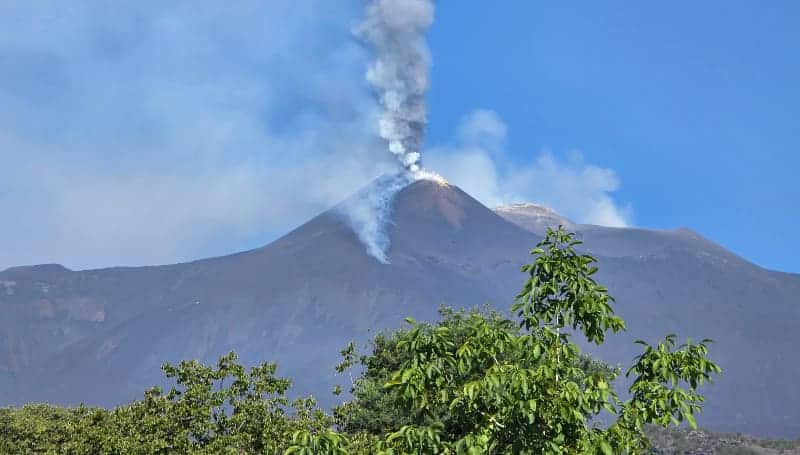
What does “active volcano” mean?
Etna produces gas emissions, ash, lava fountains and lava flows, from summit or flank vents. Gas and fumaroles are not harmless: avoid exposure and follow the guide’s instructions. INGV monitors the volcano, but monitoring does not make sudden events predictable in every case.
Current activity and dated reports
For the latest reported activity, read the dated INGV bulletins. Distinguish the issue date, the period observed and any later updates. A historic eruption is not evidence of conditions today. Our webcam page is a visual aid only: check the image timestamp and do not infer a live eruption or permission to approach from it.
Access depends on the route and current measures
- Lower slopes and villages: access can also be affected by local restrictions, weather or emergency measures.
- Mid-altitude routes: check the trail and transport conditions for the day. Lower altitude does not guarantee that a route is open.
- Summit area: access and maximum altitude depend on the ordinances in force. A guide must respect closures and can change or stop the itinerary.
Volcanic risk remains even during apparently quiet periods.
How eruptions affect tours
The guide checks the proposed route against current restrictions, weather and volcanic activity. An excursion may be changed or cancelled. Alternatives such as the Sartorius walk or cable car and 4x4 tour also depend on their own access and operating conditions.
See the three private excursions for each itinerary’s requirements.
Official references: Civil Protection — Etna and volcanic risk and INGV bulletins.
Your questions, answered
Is Mount Etna active or dormant?
Etna is active, with recurring eruptive episodes and gas emissions. It does not follow a reliable “one eruption every few years” schedule. Current activity should be checked in dated official reports.
Is it safe to visit Etna now?
A general article cannot confirm access today. Check current official restrictions and ask the guide about your route. An excursion can be modified or cancelled, and volcanic risk is never absent.
When did Etna last erupt?
Etna produces eruptive episodes regularly — the most recent activity is documented in the official INGV bulletins. Ash emissions and Strombolian activity at the summit craters are part of the volcano's normal behaviour.
Can you see lava at Mount Etna?
Lava may be visible during an eruptive phase, especially at night. Visibility and access are not guaranteed. Do not approach flows or closed areas; a guide can assess whether an authorised observation point is suitable.
More practical doubts — clothing, kids, booking? The Mount Etna FAQ covers them all.