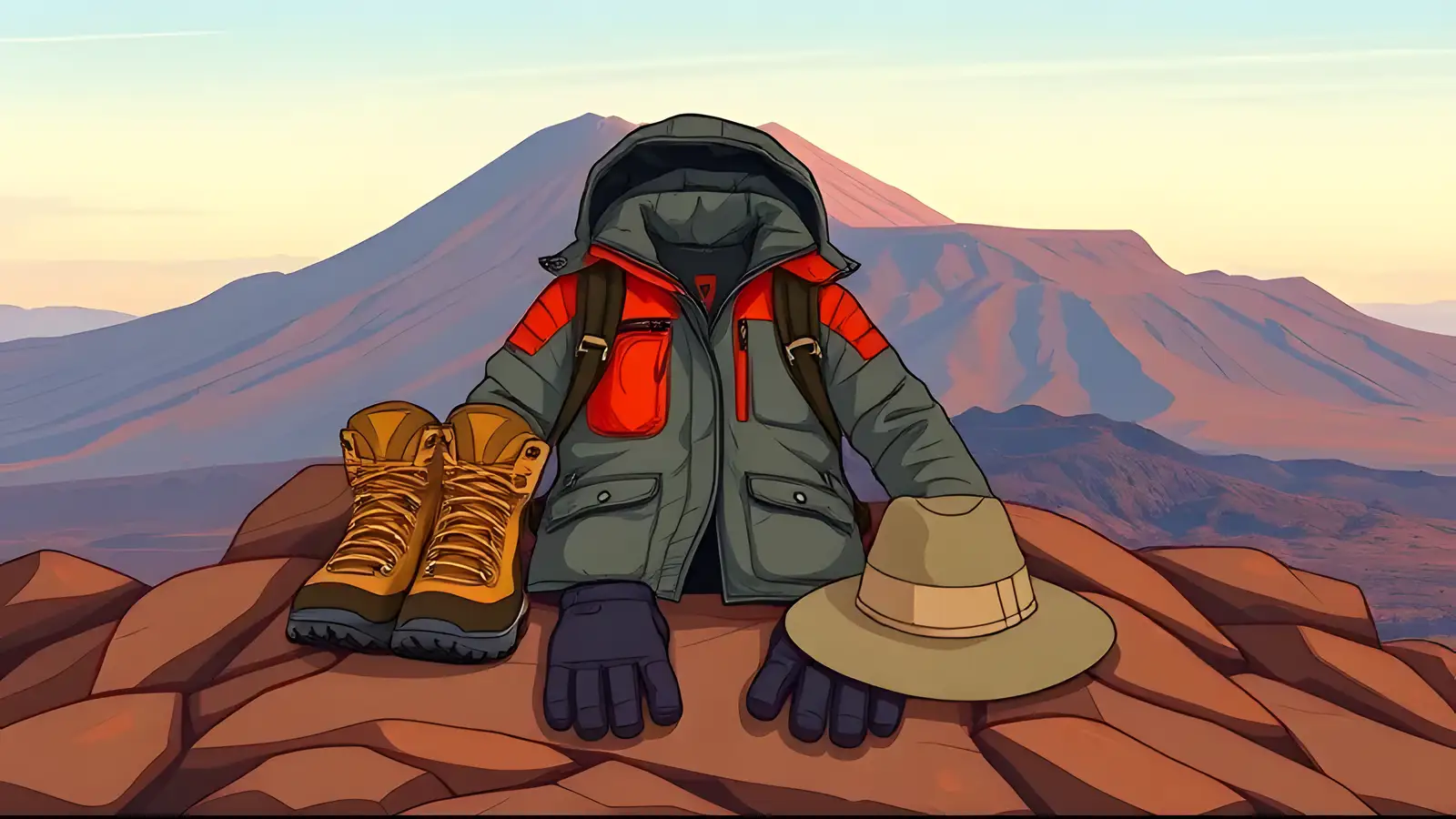
The one rule: altitude changes everything
Temperature depends on altitude, wind and the weather that day: there is no fixed difference from the coast. Check a forecast for the altitude and time of your route, including wind and the freezing level. Bring layers and a windproof jacket even in summer.
Adapt your layers to the forecast
Use a base layer that manages moisture, an insulating mid-layer and an outer layer suited to wind and precipitation. Adjust warmth to the forecast and your route; three named layers are not a guarantee of adequate protection in every condition. Include long trousers, sun protection and, when needed, gloves and a warm hat. Wet clothing, wind and cold need to be considered together.
Footwear: the part people get wrong
Our private cable car and 4x4 tour includes about 1 hour 30 minutes of walking at altitude: wear closed shoes with good grip for volcanic ground.
What to wear by season
Use the season as an initial guide, then check the actual forecast. Snow or ice can affect higher routes beyond winter; summer can still require warm clothing and wind protection. Autumn does not guarantee mild conditions. In winter, verify whether the booked programme can operate and which equipment it requires. Clothing cannot make a closed or unsuitable route accessible.
By type of excursion
The summit programme requires suitable hiking footwear and clothing for a demanding high-altitude walk. Cable Car & 4x4 still includes about 90 minutes walking within three hours; use closed footwear with grip. For Sartorius, plan for volcanic ground, sun, wind and the actual walking duration. Check the published requirements for your selected route.
What to wear on Etna — quick answers
How cold is it at the top of Mount Etna?
Temperature depends on altitude, wind and the weather that day: there is no fixed difference from the coast. Check a forecast for the altitude and time of your route, including wind and the freezing level. Bring layers and a windproof jacket even in summer.
Do I need hiking boots for Etna?
Use the footwear specified for the chosen programme. Hiking shoes or suitable boots are appropriate for demanding routes; the cable-car programme still involves volcanic terrain and about 90 minutes walking. Closed shoes must have adequate grip; sandals are unsuitable.
What should I wear to Etna in summer?
Layers, even in July: a t-shirt plus a fleece or light down mid-layer and a windproof jacket for the top, long trousers, closed shoes, sunglasses, sun cream and a hat. The coast is hot, but the high slopes stay cool and exposed to wind.
Can I rent warm clothing on Etna?
Some operators and the cable-car area rent jackets and boots, but availability and sizes are not guaranteed. Bringing your own layers is always the safer choice — and your guide will tell you honestly what the day needs.
Not sure what the weather will do? Check the Etna forecast before you pack, and see the volcano live on our webcam.