
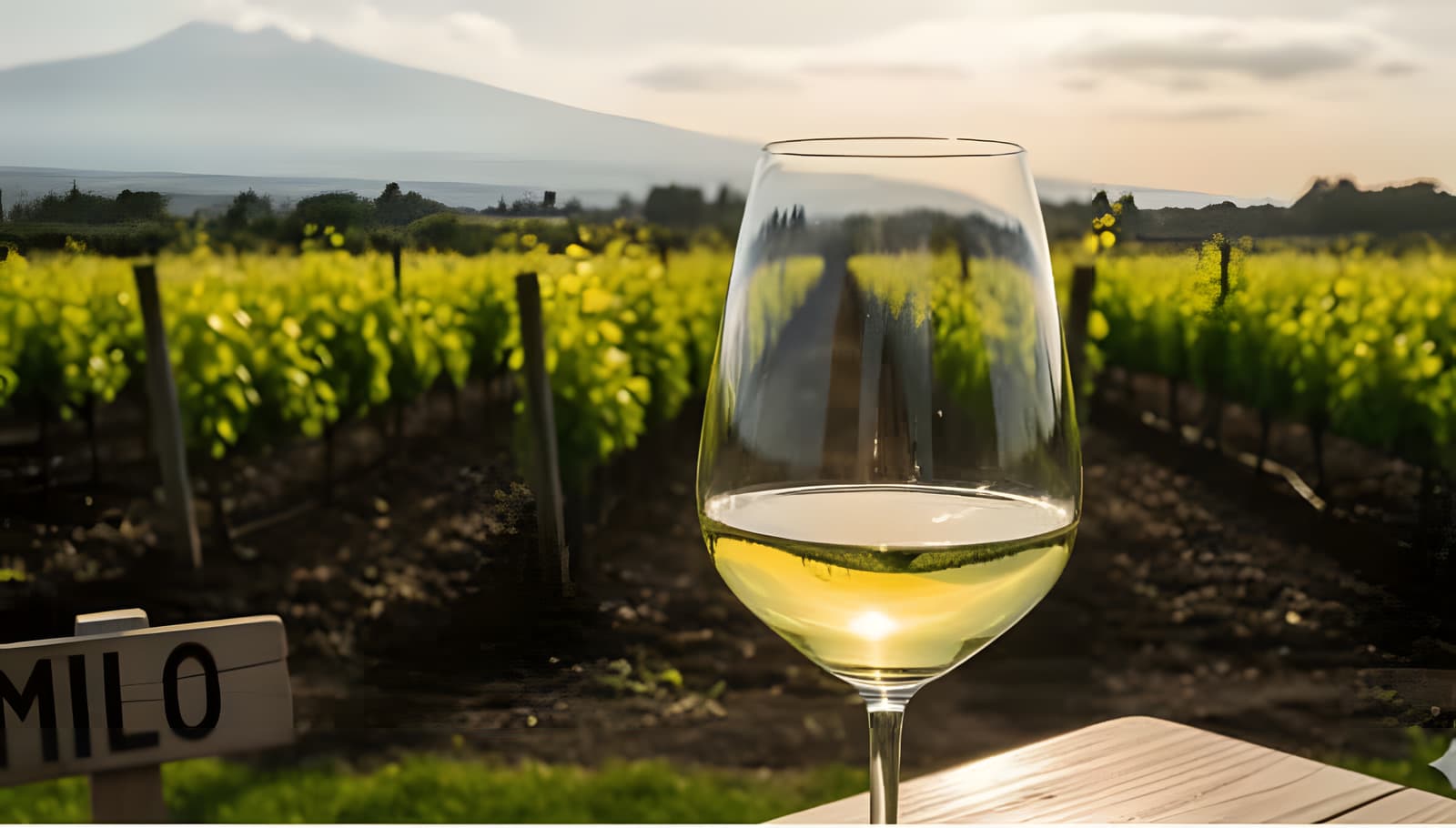
Milo's terroir: a volcanic canvas
Milo lies on Etna’s eastern side, where vineyard exposure, altitude, soils and local weather vary from plot to plot. A volcanic origin is part of the growing environment, not a guarantee that all wines share one flavour or quality level. Identify the producer and vineyard before generalising about the whole area.
Carricante, the ancestral grape
Carricante is the principal grape in Etna Bianco Superiore. Acidity, citrus or floral notes and changes with age depend on the wine, vintage, production and storage. Tasting descriptions are a guide to comparison, not a promise that every bottle will develop the same aromas or age for a fixed number of years.
The DOC rules that make it “Superiore”
- Grapes from the delimited production area within the municipality of Milo
- Minimum 80% Carricante; other varieties are subject to the production specification
- Minimum total alcoholic strength of the finished wine: 12% vol; minimum natural potential of the grapes: 11.5% vol
Contrade: the micro-terroirs of Milo
Contrada names identify delimited vineyard areas in the Etna DOC production specification. Check a bottle’s label and the official list to identify its origin; a district name alone does not guarantee a particular flavour or ageing potential.
Food pairings
- Grilled swordfish, tuna and prawns
- Pasta with clams or sea urchins
- Fresh cheeses — ricotta infornata, young pecorino
- Wild fennel salad, Sicilian caponata
Taste it where it is born
Ask the winery directly about current visiting hours, availability, price and the wines included. Our mountain excursions do not include winery visits or transfers. The ViniMilo 2025 article is a historical account; consult the organiser for another edition. Plan travel and a return driver who will not drink.
Etna Bianco Superiore — quick answers
What is Etna Bianco Superiore?
An Etna DOC white from the delimited production area within the municipality of Milo, with at least 80% Carricante and the other requirements of the specification.
How does it differ from Etna Bianco?
The production specification sets a delimited area within Milo and a higher minimum share of Carricante, among other requirements. Not every vineyard inside the municipal boundary automatically qualifies.
What does it taste like?
Characteristics vary by bottle, vintage, producer and storage. Freshness and citrus or floral notes can be useful tasting descriptions; fixed aromas or ageing periods are not guaranteed.
Where can it be tasted?
Ask individual producers about confirmed visits and tastings. Check the dated ViniMilo programme for the edition you intend to attend.